
7 Best Natural Sugar Substitutes in India (2026): Ranked by GI, Taste & Versatility
The 7 best natural sugar substitutes available in India today, ranked: Blue Agave Syrup, Coconut Sugar, Date Syrup, Honey, Stevia, Monk Fruit, and Jaggery. Agave takes the top spot because of its low glycemic index (~17), clean taste, and ability to dissolve in cold drinks. Each option has its own strengths depending on what you're cooking, baking, or drinking.
India has more diabetics than any other country on Earth, and the rest of us aren't far behind in being suspicious of refined white sugar. The good news is that 2026 has more legitimate natural alternatives on Indian shelves than ever before. The bad news is that most of them are marketed with claims that don't hold up.
Here's the honest ranking, based on glycemic index, taste, versatility, price, and how easy each one is to actually buy in India. Where rankings get close, we've leaned toward what's practical for daily kitchen use rather than what looks best on a lab report.
How we ranked them
Every sweetener on this list was evaluated on five criteria:
- Glycemic index (lower is better for blood sugar stability)
- Taste profile (neutral or pleasant, no aftertaste)
- Versatility (does it work across coffee, cocktails, baking, cooking?)
- Availability in India (can you actually buy it without a special order?)
- Price per use (rupees per teaspoon, in practical terms)
A "natural" sweetener for our purposes means minimally processed and derived from a plant or natural source. We've excluded artificial sweeteners (aspartame, sucralose, saccharin) because they're a separate category and not what most readers are looking for.
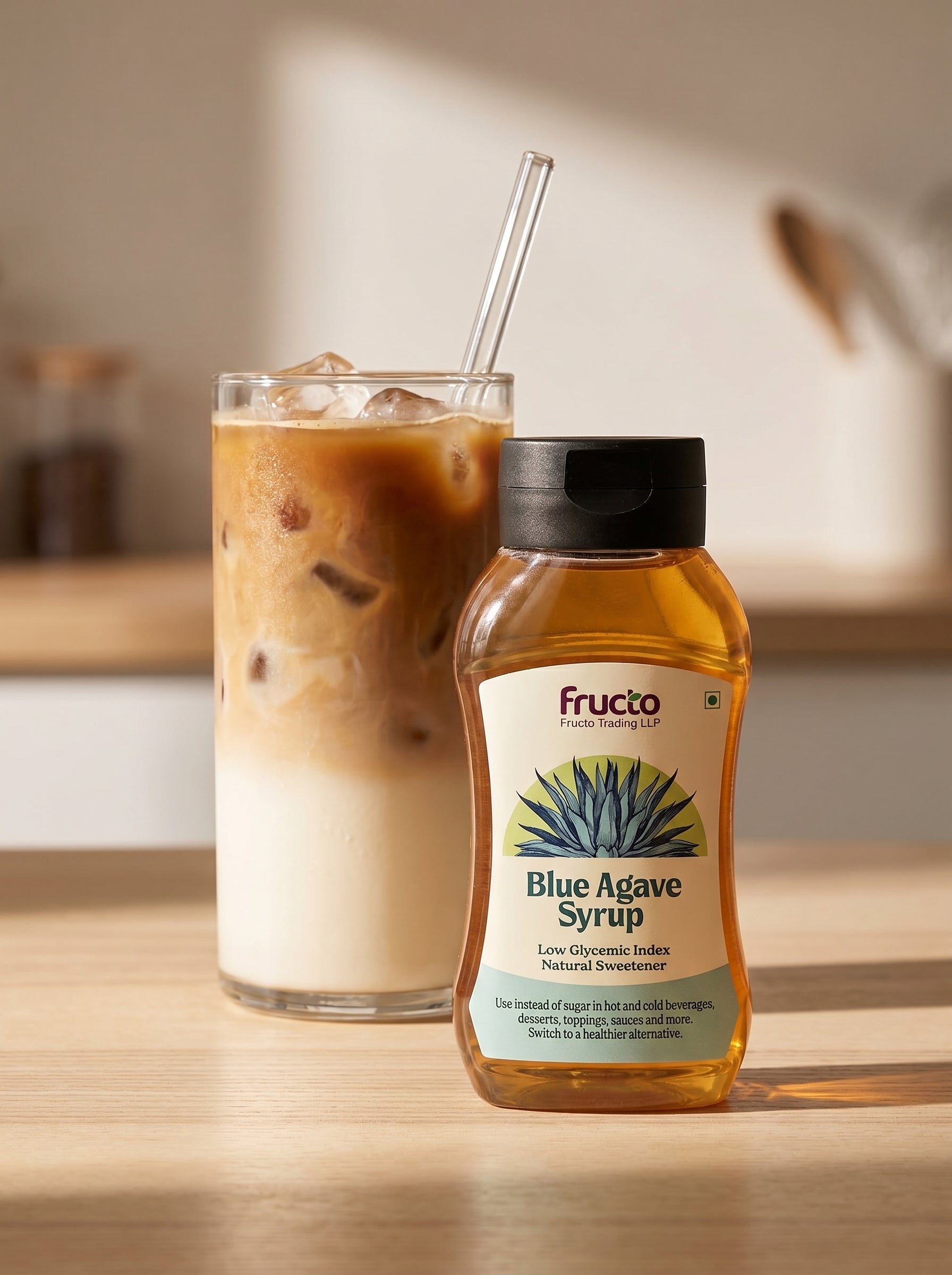
1. Blue Agave Syrup
Glycemic Index: ~17 Best for: Daily use across coffee, cocktails, baking, cooking Price in India: ₹529 per 400ml (~₹1.32/ml)
Agave syrup takes the top spot in 2026 because it's the most versatile low-GI natural sweetener available in India. It dissolves instantly in cold drinks (which honey doesn't), has no bitter aftertaste (which stevia does), and is sweet enough that you use less of it than sugar (about 1.4 times sweeter, so you save about 30 percent on every use).
What it's good at: Iced coffee, cold brews, masala chai, cocktails (margaritas, palomas, daiquiris), mocktails, smoothies, salad dressings, marinades, moist baking like banana bread and muffins.
What it's not good at: Caramelisation, crisp cookies, traditional Indian sweets that need sugar syrup, anyone on a keto diet (too high in carbs).
The honest caveat: Agave is high in fructose (70 to 90 percent depending on producer). Excessive consumption may have liver health implications, so use it in normal sweetener quantities, not as an unlimited replacement.
Why it's #1: No other natural sweetener in this list does as many things well. For most people switching from sugar in their daily routine, agave is the most realistic, sustainable upgrade.
Where to buy in India: Fructo (fructo.in) and Amazon India. Other options on Amazon include Urban Platter and BEVS, though pricing and availability vary.
2. Coconut Sugar
Glycemic Index: ~35 Best for: Indian-style baking, traditional sweets, daily cooking Price in India: ₹250 to ₹400 per 500g
Coconut sugar is made from the sap of coconut palm flowers, dehydrated into a brown granulated form that looks and tastes a lot like brown sugar. It has a mild caramel flavour, which is wonderful in some recipes and limiting in others.
What it's good at: Banana bread, oatmeal cookies, anything where a hint of caramel or molasses adds depth, marinades, sauces, and any Indian recipe that would normally use jaggery but where you want a slightly lower GI.
What it's not good at: Cocktails (too strongly flavoured), iced drinks (doesn't dissolve well in cold liquid), neutral applications where you don't want any added flavour.
The honest caveat: Coconut sugar's GI of around 35 is meaningfully better than sugar's 65, but it's still higher than agave, honey, or stevia. Marketing claims of "diabetic-friendly" are an overreach. Use in moderation.
Where to buy in India: Good Graze, Organic India, Pure & Sure, available on Amazon, Flipkart, and most premium grocery stores.
3. Date Syrup
Glycemic Index: ~50 Best for: Indian sweets, robust baking, breakfast bowls Price in India: ₹350 to ₹600 per 400g
Date syrup is made by extracting the natural sugars from soaked dates, then reducing them into a thick, dark brown syrup. It has a powerful, complex flavour with notes of caramel, treacle, and dried fruit.
What it's good at: Pancakes, waffles, yogurt drizzles, overnight oats, granola, energy balls, modernised versions of kheer and other Indian milk-based sweets, and pairing with strong flavours like cocoa and coffee.
What it's not good at: Anything where you want neutral sweetness. Date syrup announces itself. It's also too thick for most cold drinks and cocktails.
The honest caveat: Date syrup has more nutrients than refined sugar (iron, potassium, magnesium), but its GI of around 50 is similar to honey. It's better than sugar but not in the same low-GI category as agave or stevia.
Where to buy in India: Conscious Food, Two Brothers Organic Farms. Imported brands like Just Date Syrup are available on Amazon at a premium.
4. Honey
Glycemic Index: ~58 Best for: Warm drinks, traditional remedies, mild floral sweetness Price in India: ₹200 to ₹800 per 500g (huge quality range)
Honey is the sweetener most Indian households already trust, and the one most people assume is "the healthy option." That's partly true. Real, raw honey has antibacterial properties, trace nutrients, and a flavour profile no synthetic sweetener can match.
What it's good at: Masala chai, warm milk, kashayam, sore-throat remedies, marinades for grilled meats, savoury glazes, salad dressings that benefit from floral notes.
What it's not good at: Iced drinks (doesn't dissolve well), cocktails (flavour clashes with most spirits), vegan diets (it's an animal product), anyone managing blood sugar tightly (GI is moderate, not low).
The honest caveat: Most commercial honey in India is heavily adulterated. A 2020 CSE investigation found that 77 percent of major honey brands tested contained sugar syrup. If you're buying honey for health reasons, you need to buy from small-batch ethical producers (Last Forest, Under The Mango Tree, Sundarini), which costs significantly more than mass-market brands.
Where to buy in India: Last Forest, Under The Mango Tree, Sundarini, Beejom for ethical honey. Most supermarket honey is suspect.
5. Stevia
Glycemic Index: 0 Best for: Calorie-conscious dieters, keto, diabetics needing zero impact Price in India: ₹400 to ₹1,200 depending on format
Stevia is extracted from the leaves of the Stevia rebaudiana plant and is about 200 to 300 times sweeter than sugar by volume. A tiny pinch sweetens an entire cup of tea.
What it's good at: Anyone tracking calories strictly, keto and low-carb diets, diabetics who need zero glycemic impact, large beverages where the volume of agave or honey would be impractical.
What it's not good at: Baking (no bulk, no caramelisation, no browning), cocktails (no body, no syrup consistency), anything where the slight bitter or licorice aftertaste is detectable. Some brands of stevia (especially powdered blends with maltodextrin) cancel out the "natural" benefit.
The honest caveat: Quality varies enormously. Pure stevia extract (Reb-A based) is much better tasting than older Reb-D varieties. Powder blends with bulking agents like maltodextrin defeat the purpose. Read the label carefully.
Where to buy in India: Stevia World, Zindagi Stevia, Nature's Velvet, available widely.
6. Monk Fruit
Glycemic Index: 0 Best for: Keto dieters, diabetics, anyone wanting zero-calorie sweetening Price in India: ₹1,000+ for small bottles
Monk fruit (also called luo han guo) is a small green melon native to southern China. The extract is roughly 150 to 200 times sweeter than sugar and contains zero calories and zero carbs.
What it's good at: Strict keto, diabetic baking where zero impact is required, anyone who's tried stevia and disliked the aftertaste (monk fruit is generally rated as more neutral).
What it's not good at: Cost (it's by far the most expensive option on this list per use), availability (still hard to find in regular Indian grocery stores), bulk recipes (you only need tiny amounts, so it doesn't work in recipes calling for cups of sweetener without combining with another bulking ingredient).
The honest caveat: Most monk fruit products sold in India are blends with erythritol (a sugar alcohol) to add bulk. Read labels carefully if you specifically want pure monk fruit extract.
Where to buy in India: Lakanto, Sukrin (online), specialty health food stores. Often easier to import via Amazon Global.
7. Jaggery (Gur)
Glycemic Index: ~84 Best for: Traditional Indian sweets, comfort food, robust flavour Price in India: ₹80 to ₹200 per kg
We've included jaggery because it's the natural sweetener most Indian households know best. Jaggery is unrefined cane sugar, made by boiling sugarcane juice into a solid block. It's been part of Indian cooking for thousands of years.
What it's good at: Traditional sweets (chikki, gajak, til ladoo), pongal, Indian-style oatmeal, marinades for non-vegetarian dishes, recipes that benefit from molasses-like depth.
What it's not good at: Daily coffee or tea (the flavour is strong), cocktails, smoothies, anything where neutrality matters, and crucially, anyone managing blood sugar.
The honest caveat: This is the most important caveat on this entire list. Despite "natural" and "traditional" branding, jaggery has a glycemic index of around 84, which is higher than refined white sugar (65). The "unrefined = healthier" assumption simply doesn't apply here. For traditional uses, jaggery is wonderful. As a daily sweetener for someone watching blood sugar, it's worse than sugar.
Where to buy in India: Everywhere. Local kirana stores often have the freshest jaggery.
The full comparison table
| Sweetener | GI | Sweetness | Versatility | Indian Price |
|---|---|---|---|---|
| Blue Agave Syrup | ~17 | 1.4x sugar | ★★★★★ | ₹529 / 400ml |
| Coconut Sugar | ~35 | 1x sugar | ★★★ | ₹300 / 500g |
| Date Syrup | ~50 | 1.3x sugar | ★★★ | ₹450 / 400g |
| Honey | ~58 | 1.2x sugar | ★★★★ | ₹400 / 500g |
| Stevia | 0 | 200-300x | ★★ | ₹600 / 250g |
| Monk Fruit | 0 | 150-200x | ★★ | ₹1,200+ |
| Jaggery | ~84 | 1x sugar | ★★★★ | ₹120 / kg |
Which sweetener should you actually buy?
Here's our practical recommendation based on what you're trying to do:
If you just want one bottle that handles everything in your kitchen: Blue Agave Syrup. It works in your coffee, your cocktails, your dressings, and your baking. The 400ml Fructo bottle covers an average household for 30 to 45 days.
If you have diabetes and need the lowest possible glycemic impact: Stevia or monk fruit are the only options with zero GI. Agave is a strong second choice. Talk to your doctor before changing your sweetener regularly.
If you're a home baker who makes mostly traditional recipes: Coconut sugar for everyday baking, jaggery for traditional Indian sweets, agave for moist cakes and muffins.
If you make a lot of cocktails or iced drinks: Agave is the only sensible choice. Honey, jaggery, and coconut sugar all fail in cold liquid applications.
If you want the most "natural" option in the traditional Indian sense: Honey from an ethical producer, or fresh jaggery from a trusted source. Just be honest with yourself about the glycemic impact.
If you're on keto: Stevia or monk fruit only. Everything else on this list (including agave) has too many carbs.
What about combining sweeteners?
Many serious bakers and home cooks use a combination of two or three sweeteners depending on the recipe. This is smart. For example:
- Coffee in the morning: agave for neutrality
- Afternoon tea: a tiny bit of honey for floral warmth
- Weekend baking: agave plus a small amount of coconut sugar for depth
- Traditional Indian sweet on a festival: jaggery, no apologies
You don't have to pick one and stick with it for life. The whole point of having options is to use the right tool for the moment.
What to avoid: marketing claims that don't hold up
A few common claims you'll see on sweetener packaging that are technically misleading:
"Diabetic-friendly" on a high-GI product. Jaggery, coconut sugar, and even some honey brands use this language. Check the GI yourself.
"Sugar-free" on a product with palm sugar or coconut sugar. These are still sugars. The "sugar-free" label here refers only to refined white sucrose.
"Natural" as a substitute for "healthy." Jaggery is natural. It also has a higher GI than sugar. Natural is not automatically better.
"Zero calorie" on stevia blends with maltodextrin. Maltodextrin has roughly the same GI as sugar. Read the ingredient list, not just the front of the packet.
Frequently Asked Questions
Which sugar substitute tastes most like sugar? Agave syrup and date syrup come closest to actual sugar in taste, with agave being more neutral and date syrup being more caramel-like. Stevia and monk fruit are the furthest from sugar in flavour profile.
Is jaggery really worse than sugar? For blood sugar impact, yes. Jaggery's glycemic index of around 84 is higher than refined sugar's 65. For other criteria (less processing, trace minerals, traditional cooking), jaggery has merits, but it's not a smart choice for daily sweetening if you're concerned about glycemic load.
What's the cheapest natural sweetener in India? Jaggery, by a wide margin. About 120 rupees per kilogram. The cheapest premium option is good-quality honey or coconut sugar.
Can I use agave instead of sugar in any recipe? Almost any recipe, with two adjustments: use about three-quarters the amount called for (since agave is sweeter), and reduce other liquids by about one-fourth (since agave is itself a liquid). For recipes requiring caramelisation or crispness, stick with sugar.
Is agave better than honey? For most applications outside of warm beverages and traditional remedies, yes. Lower GI, better in cold drinks, vegan, more neutral flavour. For warm drinks and the specific health properties of raw honey, honey can win.
The bottom line
If you only buy one natural sweetener in 2026, make it agave. It's the most versatile, has the lowest GI of any natural liquid sweetener available in India, and works across more applications than any alternative. If you can afford a small collection of sweeteners, add coconut sugar for depth and stevia for zero-calorie applications. Skip the marketing-driven "healthy jaggery" claims and judge each product on its actual glycemic index and what you're making.
Ready to start with the top pick? Our 400ml bottle at ₹529 is available directly at fructo.in.
Try Fructo Blue Agave Syrup | Read: Is Agave Syrup Good for Diabetics?
0 comments